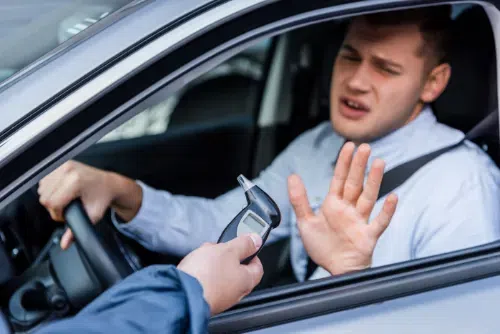
If you took the breathalyzer during your DUI arrest and your blood alcohol concentration (BAC) was over the legal limit, you can be almost certain that prosecutors are planning to use your BAC against you in court. A high BAC is among the strongest types of evidence available in DUI cases, and, under Arizona law, if your BAC was over the legal limit, this alone is enough to warrant a conviction.
But, while a high BAC can be strong evidence in an Arizona DUI case, there are also various issues that can render a DUI suspect’s BAC reading unreliable. If your BAC reading is unreliable, then prosecutors shouldn’t be able to use it to prove your guilt beyond a reasonable doubt.
This makes it critical to ensure that you challenge your high BAC reading by all means available.
Common Issues with Breathalyzer (BAC) Readings in Arizona DUI Cases
How can you challenge your high BAC reading? Broadly, there are three main issues that can render BAC readings unreliable. Within each of these three categories, there are several specific issues that DUI defendants (and their defense attorneys) may be able to raise in court:
1. Issues with the Breathalyzer Device Itself
Despite their widespread use in Arizona and other states, breathalyzer devices can suffer from a variety of issues that can render DUI suspects’ BAC readings unreliable. For example, the following issues (among others) can potentially serve as defenses to a DUI charge based on a high BAC:
- Improper Programming or Setup – In order to accurately calculate a DUI suspect’s BAC, a breathalyzer device must be programmed correctly and set up properly. If a breathalyzer device isn’t programmed or set up property—whether at the factory or at the police station—these are both issues that can make it impossible to accurately assess the level of alcohol in a suspect’s breath or blood.
- Improper Calibration – Calibration issues can lead to unreliable results as well. Not only must breathalyzer devices be calibrated prior to use generally, but they must also be calibrated to the conditions at the time of the test. For example, the ambient temperature can skew DUI suspects’ BAC readings, so this is a factor that needs to be taken into account prior to testing.
- Radio Frequency Interference (RFI) – In some cases, radio frequency interference (RFI) can skew breathalyzer results as well. If there is any possibility that RFI impacted your BAC reading during your DUI stop, this alone could be enough to raise reasonable doubt about whether a life-altering conviction is warranted.
Again, these are just examples. When you hire an experienced defense lawyer to represent you, your lawyer will examine the specific model of breathalyzer used during your DUI stop to assess any potential reliability issues. If any issues with the breathalyzer device itself provide grounds to fight your DUI, your defense lawyer can then raise these issues on your behalf.
2. Issues with Breath Test Administration
Along with issues related to the breathalyzer device itself, issues with how the police administer the breath test during a DUI stop can also raise critical questions about a BAC reading’s reliability. Some common breath test administration errors that can lead to faulty or skewed BAC readings include:
- Failure to Explain How to Take the Breath Test – Before administering the breathalyzer, police officers must explain how to take the test. If your arresting officer did not explain how to take the test, you may not have taken it properly. This could mean that your reading on the breathalyzer isn’t an accurate reflection of your BAC at the time of your arrest.
- Failure to Property Administer the Breath Test – Along with explaining how to take the breathalyzer, police officers also need to administer the test properly. If your arresting officer did not follow all of the requisite procedures for obtaining a reading of your BAC, this could serve as a defense in court as well.
- Failure to Account for Environmental or Other Factors – From the ambient temperature to whether you have just thrown up on the side of the road, the police must consider a long list of environmental and other factors when administering the breath test. If your arresting officer failed to properly account for any issue that could have improperly influenced your BAC reading, this is an issue that you can—and should—raise in court.
Here too, these are just examples. In many cases, this is where dash camera or body-worn camera footage can come into play. If the footage from your arrest shows that your arresting officer failed to follow the requisite procedures for properly obtaining a BAC reading during your DUI stop, your defense lawyer may be able to use the footage to seek a pre-trial dismissal or fight for a “Not guilty” verdict in court.
3. Issues with Your BAC Reading
In addition to the types of issues discussed above, there could also be issues with your specific BAC reading. Some examples of issues that can return “false positive” BAC readings on breathalyzers include:
- A high level of mouth alcohol
- A high breath or body temperature
- An irregular breathing pattern
- An abnormal blood-breath partition ratio
- A slow metabolism
- Burping or vomiting before taking the test
- Being on a ketogenic diet
- Having acid reflux or certain other medical conditions
- Smoking (which can increase the amount of acetaldehyde in your breath)
Due to the numerous potential issues with BAC results, even if you blew 0.08% or above during your DUI stop, you should not assume that you will be found guilty in court. To find out what defenses you can assert in your Arizona DUI case, you should consult with an experienced defense lawyer as soon as possible.
Schedule a Free and Confidential Consultation with a Phoenix DUI Defense Lawyer Today
Are you facing a DUI in Arizona after blowing over the legal limit during your traffic stop? If so, we can help, but it is important that you contact us promptly. To schedule a free and confidential consultation with an experienced Phoenix DUI defense lawyer at The Weingart Firm, call us at 480-897-8737 or contact us online now.